
I didn’t always think about soil.
Like most of us, I thought about food when it reached my plate, how it tasted, how it looked, how ‘fresh’ it claimed to be. Soil felt distant. Technical. Someone else’s problem.
Until I realised this: everything we eat is only as alive as the soil it comes from. And once you see that, you can’t unsee it.
Soil Is Not Dirt. It’s a Living System.
Soil isn’t just brown earth holding a plant upright. It’s breathing. Moving. Responding. Healthy soil has:
- Microorganisms working quietly underground
- Earthworms loosening the land
- Organic matter feeding life in layers
- Air, water, and nutrients in balance
When soil is alive, plants don’t need force. They grow naturally.
This is what organic farming protects, the life beneath the surface that never gets credit.
What Happens When Soil Is Treated Like a Machine
Years of chemical farming taught us to treat soil like a factory floor. Add fertilizer. Kill pests. Increase output. Repeat. But soil doesn’t work like that.
Over time, this approach:
- Kills beneficial microbes
- Hardens and compacts the land
- Reduces the soil’s ability to hold water
- Creates dependence on stronger and more frequent chemicals
The soil still produces, but it’s tired. And tired soil produces tired food.
Organic Farming Starts With Respect, Not Control
What I appreciate most about organic farming is its basic assumption: the soil already knows what to do. Organic farming doesn’t try to dominate the land. It supports it.
Instead of chemicals, it uses:
- Compost and natural manure
- Crop rotation to avoid exhaustion
- Mulching to protect moisture
- Natural pest management instead of killing everything in sight
The focus shifts from ‘how much can we take’ to ‘how well can we sustain.’
How Organic Farming Slowly Heals the Soil
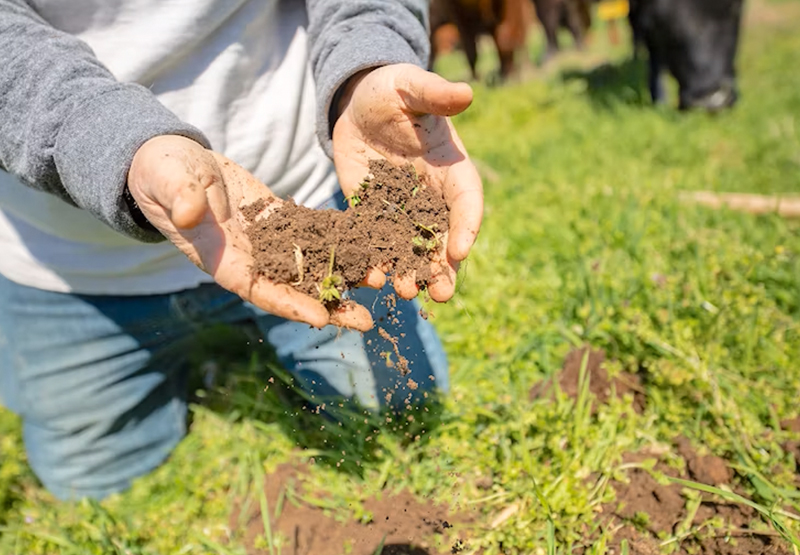
Organic farming feeds the soil, not just the plant. Organic inputs don’t rush nutrients into crops.
They break down slowly, nourishing:
- Microbial life
- Root systems
- Long-term soil fertility
This creates soil that can support crops year after year, without constant external input. It brings microbial life back. Healthy soil is alive with bacteria and fungi doing invisible but essential work.
Organic farming allows these microorganisms to:
- Convert organic matter into nutrients
- Protect plants from disease
- Improve root absorption naturally
This underground ecosystem is the real reason organic soil stays fertile.
It helps soil hold water, gently. Soil rich in organic matter behaves differently. It doesn’t flood easily. It doesn’t dry out immediately. Organic farming improves:
- Water retention during dry spells
- Drainage during heavy rain
- Overall resilience of farmland
In a world facing water stress, this matters more than ever.
Healthy Soil Changes Everything
When soil health improves, the effects ripple outward.
- Crops grow stronger
- Food carries more natural nutrition
- Farmers rely less on costly inputs
- Land becomes productive without being abused
This isn’t fast. And that’s the point. Organic farming chooses long-term nourishment over short-term gain.
Soil Health Is Personal, Even If We Don’t Notice It
The quality of our food. The strength of our immunity. The future of farming. All of it traces back to soil. When soil is treated with care, it gives back generously, quietly, consistently, without demanding more than respect.
Final Thoughts
Organic farming improves soil health because it remembers something we forgot: life grows best when it isn’t forced.
Healthy soil doesn’t need to be pushed. It needs to be trusted. And when we allow the land to heal, it feeds us better, not just today, but for generations.
At IOFI, we believe healthy food begins long before it reaches our kitchens, it begins with living soil. Every organic choice we make is rooted in respect for the land, the farmer, and the natural intelligence of the earth. By supporting organic farming, you’re not just choosing cleaner food, you’re choosing to restore soil health, protect ecosystems, and be part of a slower, more conscious food system. If this way of growing resonates with you, explore IOFI and take one small, meaningful step toward food that’s grown with care, not chemicals.